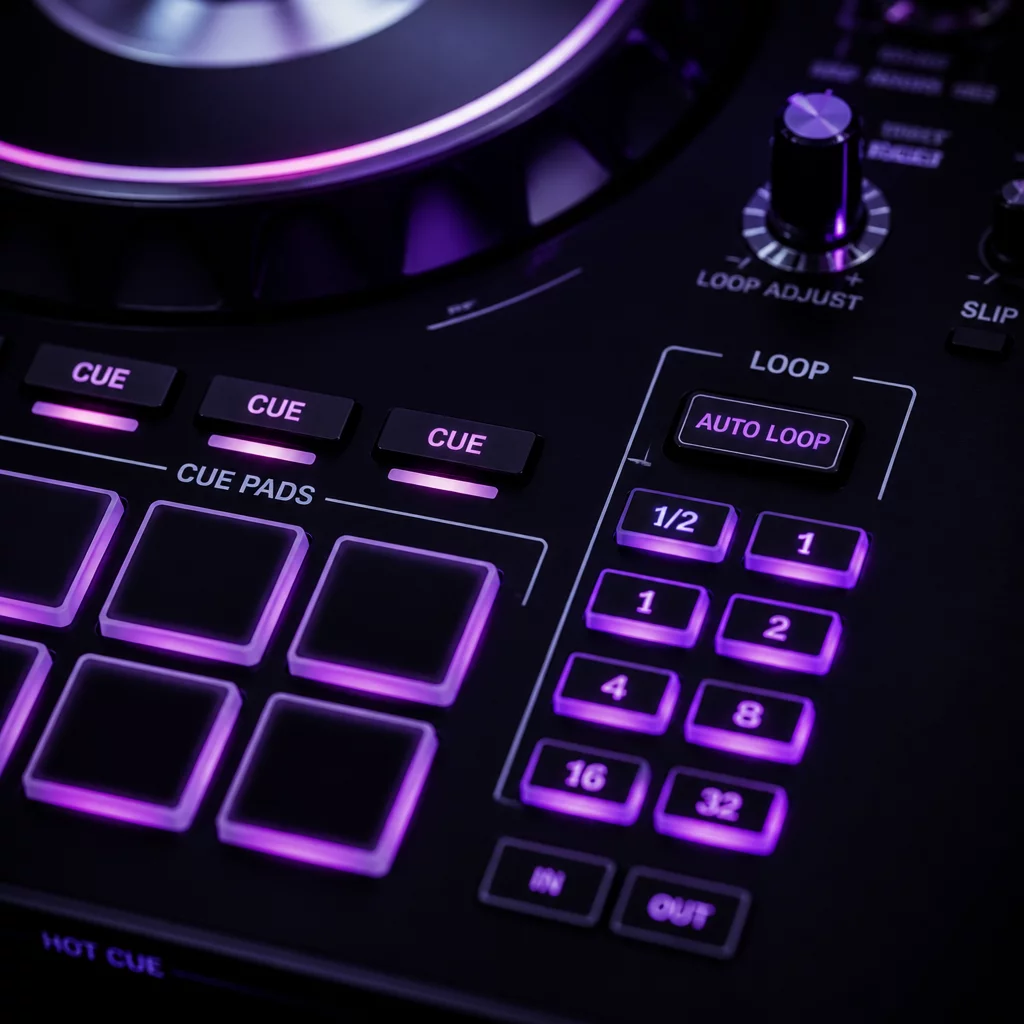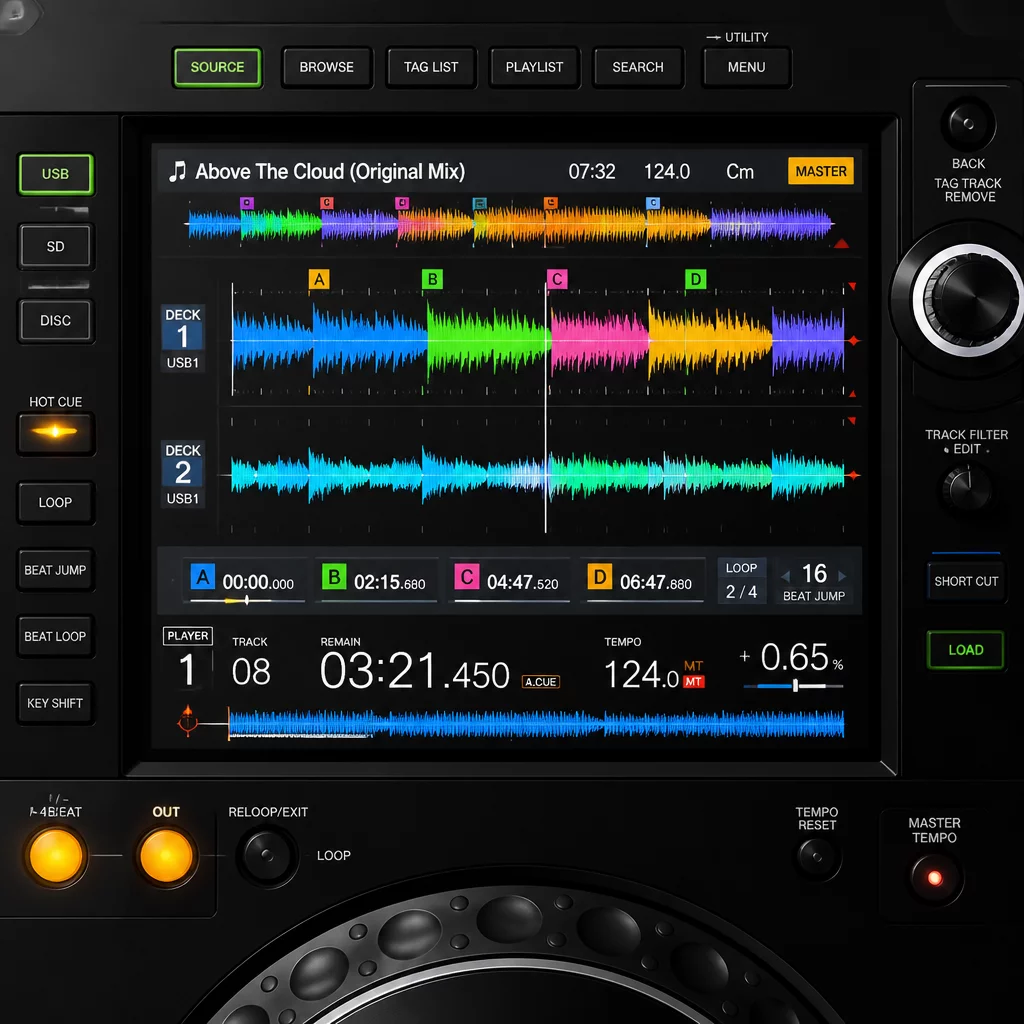
Structuring and controlling the lowest energy phases of a track using precision loops to maintain tension or trigger seamless build transitions.

A breakdown represents the moment in club arrangements where rhythm elements dissipate, leaving harmonic pads, isolated vocals, or melodic arpeggios exposed. While producers design this space to generate emotional anticipation, DJs frequently face awkward dead air or premature energy drops if the breakdown extends across 32 or 64 bars without percussive momentum. In high-tempo formats, audiences lose physical rhythm quickly when the bottom end disappears entirely.
Active loop engagement during this threshold allows performers to suspend or reconstruct the breakdown duration on demand. By capturing a balanced section where sub-bass recedes but a rhythmic shaker, hi-hat sequence, or filtered synth persists, DJs establish a structural bridge that sustains room focus without rushing the natural release.
Lock the Serato DJ Pro beatgrid on the initial downbeat of the breakdown section rather than relying on auto-detection transients, which can slip during beatless melodic sweeps.
Precision timing here prevents unintended clashes between residual low-end frequencies and the upcoming track intro. Setting a saved loop right where the kick drops out provides instant control to hold that transitional atmosphere as long as necessary.
When managing a breakdown with an eight-bar saved loop, the goal is not to trap the dancer in an unnatural repeat cycle, but to buy valuable time for matching musical keys and equalizing channels. Many modern club tracks feature sudden, stark drops that clash violently with busy outgoing grooves.
Isolate an 8-bar melodic pad before any prominent vocal sample triggers, giving you a clean harmonic bed that accepts incoming percussion without vocal collision.
Apply a 12dB high-pass curve across the looped breakdown to clear sub-200Hz frequencies and prepare headroom for the incoming kick drum punch.
Executing this technique transforms a static drop into an adaptable live remix platform. The artist controls whether the room experiences a short 16-bar dip or an elongated ambient suspension that primes the floor for a powerful subsequent drop.
Exiting the loop requires strict adherence to musical phrasing. Releasing the loop on beat 1 of bar 17 or bar 33 aligns the unlooped build-up with standard club lighting sequences and listener anticipation. Deactivating Serato DJ Pro loop active mode at the final eighth bar returns the track to its natural progression smoothly.
Halve the active loop from 8 bars down to 4, 2, and 1 bar directly before triggering the main drop to simulate an escalating snare riser effect in real time.