
Why Bar Length Dictates Musical Function, Not Just Clock Time
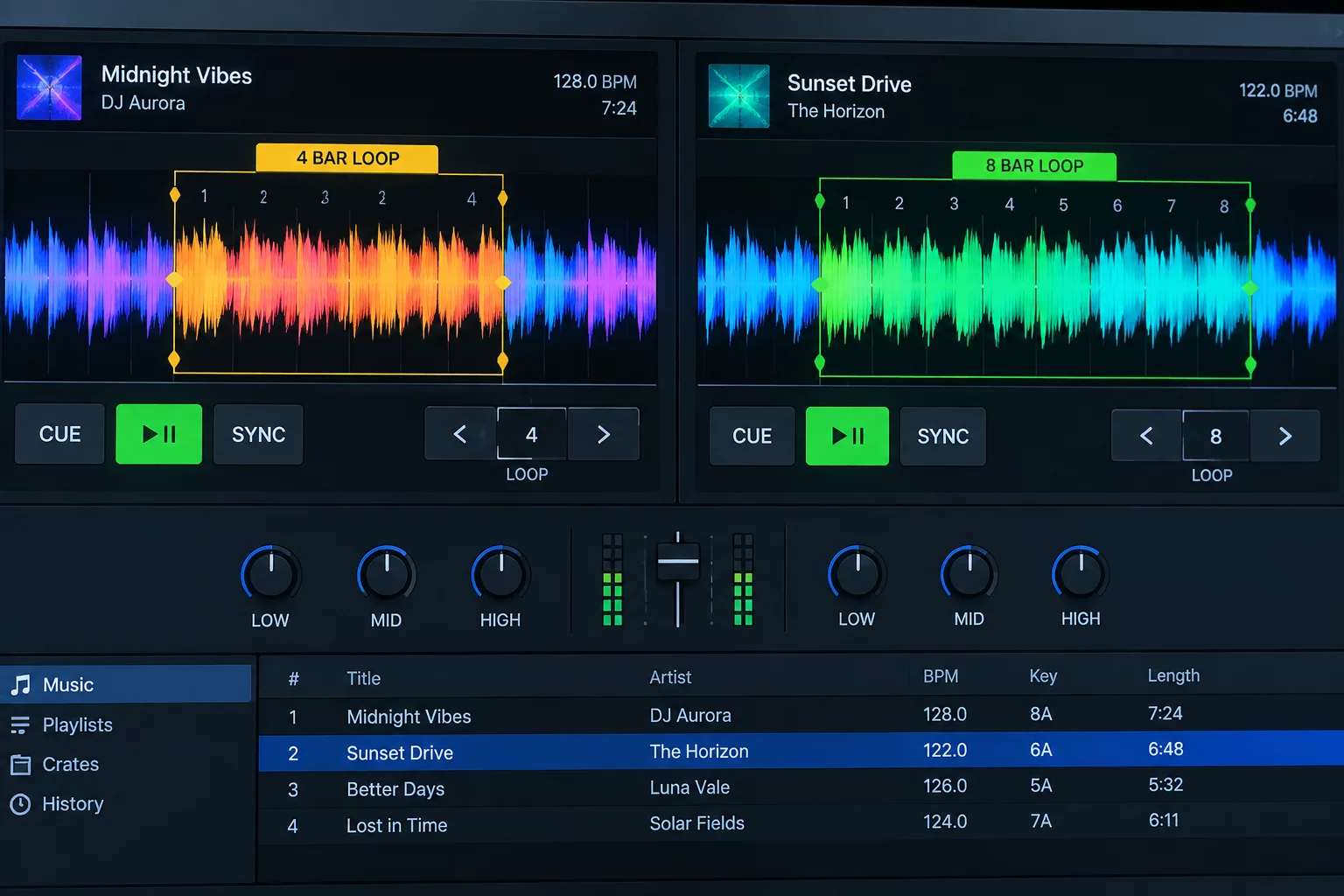
Club arrangements rely on expectations established by 16-beat and 32-beat phrases. When a DJ initiates a four-bar cycle, that 16-beat segment functions as an intense, tight rhythmic bracket. It isolates drum patterns, locks rolling basslines, and instantly removes the track's long-form melodic evolution. The dancefloor reads this brevity as elevated urgency, making it an exceptional tool for quick corrections and high-energy layering.
An eight-bar loop operates under entirely different psychological rules. Covering thirty-two beats, it preserves the complete phrase statement of modern club production. Chords have time to resolve, top-line percussion introduces subtle variations, and vocal motifs maintain their conversational cadence. The listener feels continuity rather than artificial interruption, allowing the active deck to blend transparently behind an incoming record.
The 16-Beat Metric Trap
Catching a four-bar segment inside an active chord progression cuts the musical question before its harmonic answer arrives. Always reserve four-bar loops for stripped groove sections or uniform sub-bass patterns.
"A four-bar loop is an emergency clamp designed for precise rhythmic maneuvers, while an eight-bar loop gives the arrangement space to breathe without betraying the artist's structural intent."
Preventing Ear Fatigue During Extended Channel Blends
Ear fatigue arrives rapidly when short melodic phrases restart before reaching their expected cadences. Repeating four bars of an expressive synth riff exposes the machinery of the loop after merely two passes. On the other hand, engaging an eight-bar loop allows the full melodic movement to cycle naturally, masking the software boundary and keeping the dancefloor locked in an authentic groove.
- Map four-bar loops to drum-only intro breaks to create rapid mix transitions without harmonic clashes.
- Engage eight-bar loops when blending melodic breakdowns to preserve chord progression narratives.
- Use Serato beatjump controls to shift eight-bar windows forward smoothly across upcoming arrangement changes.
Configuring Serato Saved Loops for Confident Club Work
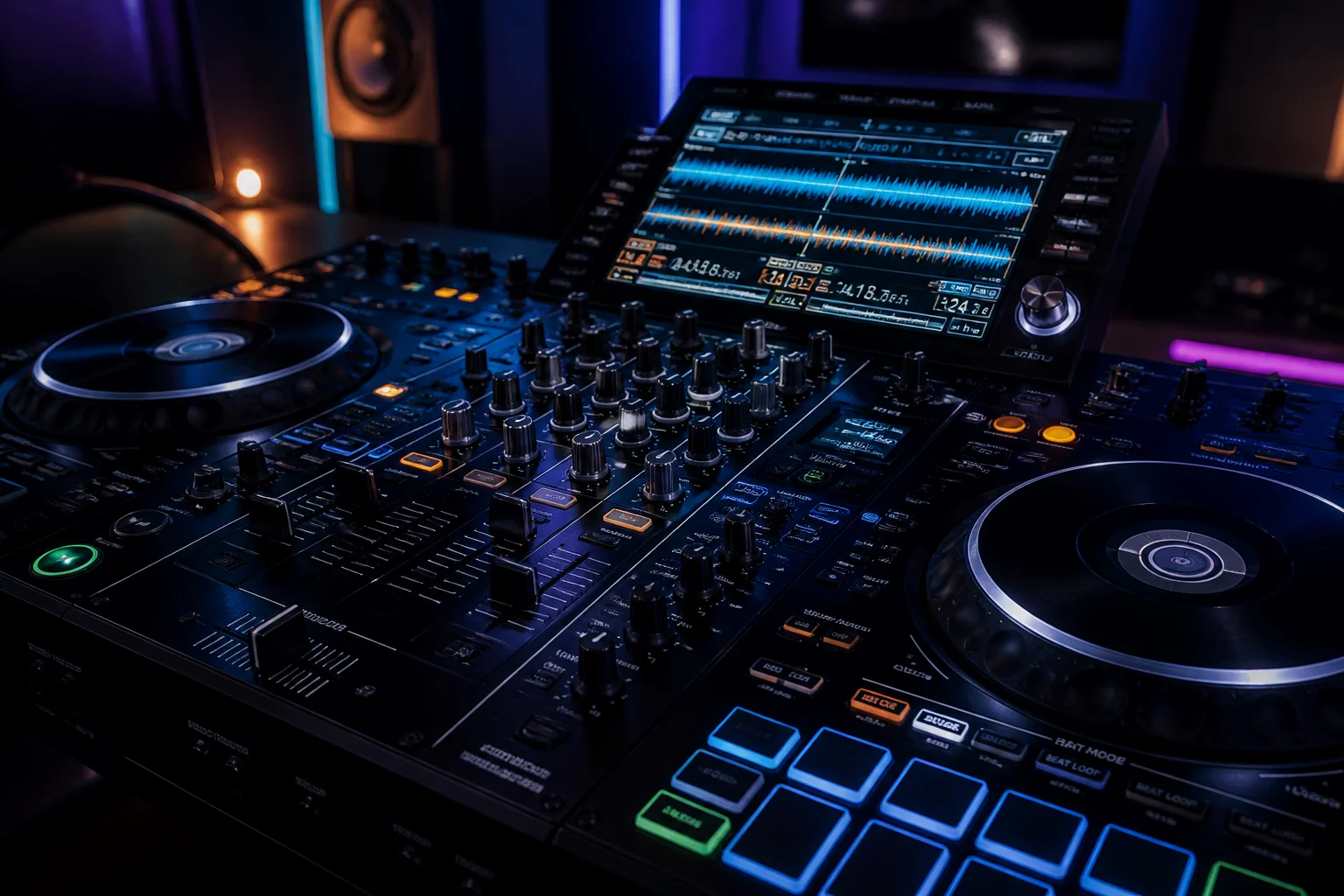
Practical setup inside Serato DJ Pro requires dedicated slot assignments for each track category. Saved loops should occupy predictable hardware pads: assign pad one to an eight-bar intro extension, reserve pad two for a tight four-bar rhythm loop, and keep pad three available for an eight-bar outro hold. This structure frees you from second-guessing bar counters under dark booth monitoring conditions.
Half-Time Drop Technique
When building anticipation during a breakdown transition, trigger an eight-bar loop first, then cut its value in half to four bars right before launching the incoming channel drop.
Refine Your DJ Structural Loop Planning
Examine in-depth practical modules on intro extensions, vocal space management, and live groove holds built directly for performance artists.